Hatfield Palace
The King's CurseHatfield Palace was the residence to which Princess Mary Tudor was sent after Henry VIII declared Anne Boleyn’s children his heirs and denied Mary’s continuing status as a princess. Its significance lies in the contrast between the formal household allotted to her and the severe restrictions imposed on her life there: Hatfield was both a royal residence and a site of political isolation.
Assignment and Household
Henry VIII’s representative was instructed to take Mary to Hatfield Palace and place her under the supervision of Sir John and Lady Anne Shelton. The household permitted to accompany her was limited to a lady’s maid, a lady-in-waiting, and a groom for her horses. Mary’s former attendants—including her ladies-in-waiting, chamberlain, master of horse, and tutor—were not included in the arrangement. The narrator understood the Sheltons to be kin to Anne Boleyn’s family and feared that Mary was being placed in a household controlled by her opponents.
Confinement and Daily Life
At Hatfield, Mary was confined to the house and not allowed to walk in its grounds. Visitors were barred because they might bring her a message or a word of comfort, while her separation from her mother deepened her isolation. She was also separated from her father, whose policies had stripped her of her former standing. The narrator reports that Mary feared eating at the high table because Boleyn cooks worked in the kitchen; instead, she cooked breakfast over the fire in her bedroom. These details make the palace’s domestic spaces part of her confinement: even meals and ordinary movement were shaped by distrust and surveillance.
Separation and Attempts to Help
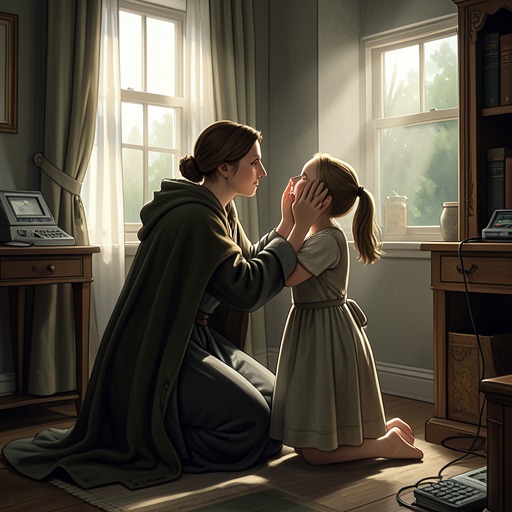
The narrator loved Mary as a daughter and repeatedly tried to reach her, sending pleading letters to Thomas Cromwell and asking the Earl of Surrey and the Earl of Essex to intervene with Henry VIII. None could secure permission for a visit. The narrator’s inability to comfort Mary turns the palace’s restrictions into a personal separation as well as a political one: Mary was kept from her mother, while the narrator was kept from Mary.
In a later phase of the crisis, a plan to rescue Mary was directed at Hunsdon rather than Hatfield Palace. The change of location marks a shift in the immediate setting of her confinement, while the plan—to seize her, take a route around London, and arrange passage from a Thames-side village—shows that her isolation had become a matter of danger and escape. Hatfield remains the defining place in the account of her demotion and restricted household: a residence where royal rank persisted in name, but freedom and companionship had been sharply curtailed.